
Pool chemicals are an essential part of maintaining your oasis. During your time as a pool owner, you may have asked: Do pool chemicals expire? This guide will review everything you need to know about the shelf life of these chemicals and how to store them properly.
Yes, Pool Chemicals Expire, but Not All the Same Way
One of the biggest misconceptions among pool owners is that pool chemicals either “work” or “don’t work.” Chemicals don’t all age the same way, and none of them stay perfectly stable indefinitely.
Liquid chlorine typically loses strength gradually, while some products absorb moisture from the air and become less reliable or harder to handle. Powdered chemicals can clump up earlier than expected, and stabilized tablets often hold up longer–but only if they’ve been stored in proper conditions.
How Long Can You Keep Pool Chemicals?
Not forever! Shelf life depends on more than just the product itself–storage conditions play a big role. Temperature changes, humidity, freezing, and direct sunlight can all speed up chemical breakdown.
In Ontario, this is a common issue for pool owners. Chemicals are often left in garages, sheds, or outdoor storage bins where they’re exposed to both summer heat and winter freezing, which can gradually reduce their effectiveness over time.
Older chemicals are not always dangerous, but they may no longer perform properly. This can result in cloudy water, algae buildup, unstable chlorine levels, or skin irritation when the pool water chemistry isn’t properly balanced.
Why Do Pools Need Chemicals?
You may have wondered at some point why pools even need chemicals to be safe. There are several reasons why adding chemicals to pool water is a common practice. The first is to allow people to swim in the same water without worrying about contamination from bodily fluids or mucous membranes.
There are many living organisms that could make a home in your pool if you don’t use chemicals. The most common threat is algae, which may pose a health threat if you come in close contact. It’s easier to prevent algae growth than to deal with a bloom.
Pool chemicals aren’t just about keeping the water clear –they also help keep the overall system in check. When water chemistry is balanced, it reduces strain on things like liners, pumps, filters, and heaters, helping them last longer.
If the water is off balance, swimmers can feel it too. People sometimes ask whether chlorine can cause skin irritation, and in some cases it can–especially when chloramine levels build up, or the chemistry isn’t properly maintained. This can leave some swimmers with dry, itchy, or irritated skin, particularly those with sensitive skin or existing conditions.
Factors Impacting Pool Chemical Shelf Life
When do pool chemicals expire? The answer depends on what chemicals you’re using. Things that can impact shelf life include:
- How they’re packaged and stored
- Exposure to heat, humidity, moisture, or sunlight
- The chemical composition of each product
- How stable the chemicals in question are
If you’re storing pool chemicals, you should pay close attention to the labels and make a note of how to maximize their shelf life through safe storage practices.
Types of Pool Chemicals
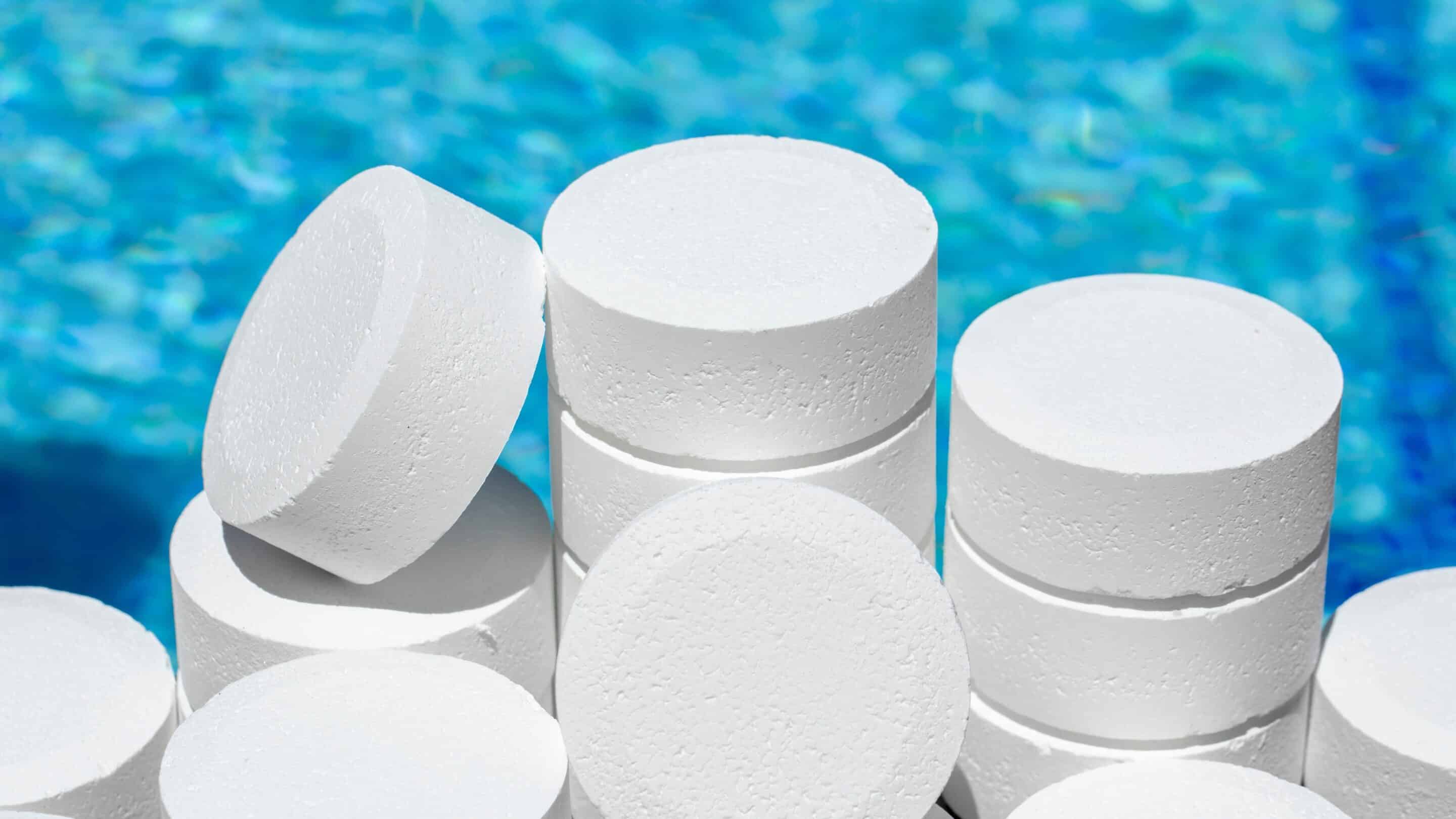
There are several types of chemicals you may use to keep your pool in great shape. These include chlorine, pH adjusters, and algaecides.
Does Chlorine Expire?
Chlorine has an impressive shelf life, but it does expire. Depending on how you store it, you can expect it to stay usable for up to five years. If kept in less favourable conditions, it could go bad in as few as three years.
Liquid chlorine usually doesn’t last as long as tablets or granules because it slowly loses strength over time.
What Happens to Chlorine When It Gets Old?
Older chlorine becomes less effective at sanitizing pool water.
When chlorine has weakened or expired, it often can’t keep bacteria and algae under control the way it should. You may find yourself adding larger amounts of product without seeing much improvement in water quality.
Liquid chlorine is especially sensitive to heat. Just a few months stored in a hot shed over the summer can noticeably weaken it.
How to Tell if Liquid Chlorine Is Expired
Liquid chlorine degrades over time, especially when stored in heat or direct sunlight. Typical signs include:
- Trouble maintaining normal chlorine levels
- A weaker or less noticeable chemical smell
- Cloudy pool water despite treatment
- Containers that have been stored for extended periods
- Reduced effectiveness during shocking
Unlike some products, expired liquid chlorine does not always look dramatically different. Sometimes the only clue is that your water chemistry refuses to stabilize.
Do pH Adjusters Expire?
You may occasionally need to increase your pool’s alkalinity, which is where sodium bicarbonate or soda ash comes into play. The shelf life for these products is typically around six months, but you can extend it by keeping them in a cool, dry location.
Exposure to moisture is one of the biggest problems with powdered chemicals. If the product starts to clump, harden, or form crystals, it’s usually a sign that it has begun to degrade.
Do Algaecides and Other Pool Chemicals Expire?
Algaecides are important chemicals because they can address sudden algae overgrowth. Manufacturers state that the chemicals last up to five years before expiring. However, some professionals don’t recommend storing more than you need for a single year in case they go bad sooner.
Generally, the best policy is always to check a product’s expiration date before storing it. Some products may last longer or need to be replaced more quickly, depending on how they were produced. Different chemical types may have significantly different shelf lives as well.
How to Store Pool Chemicals
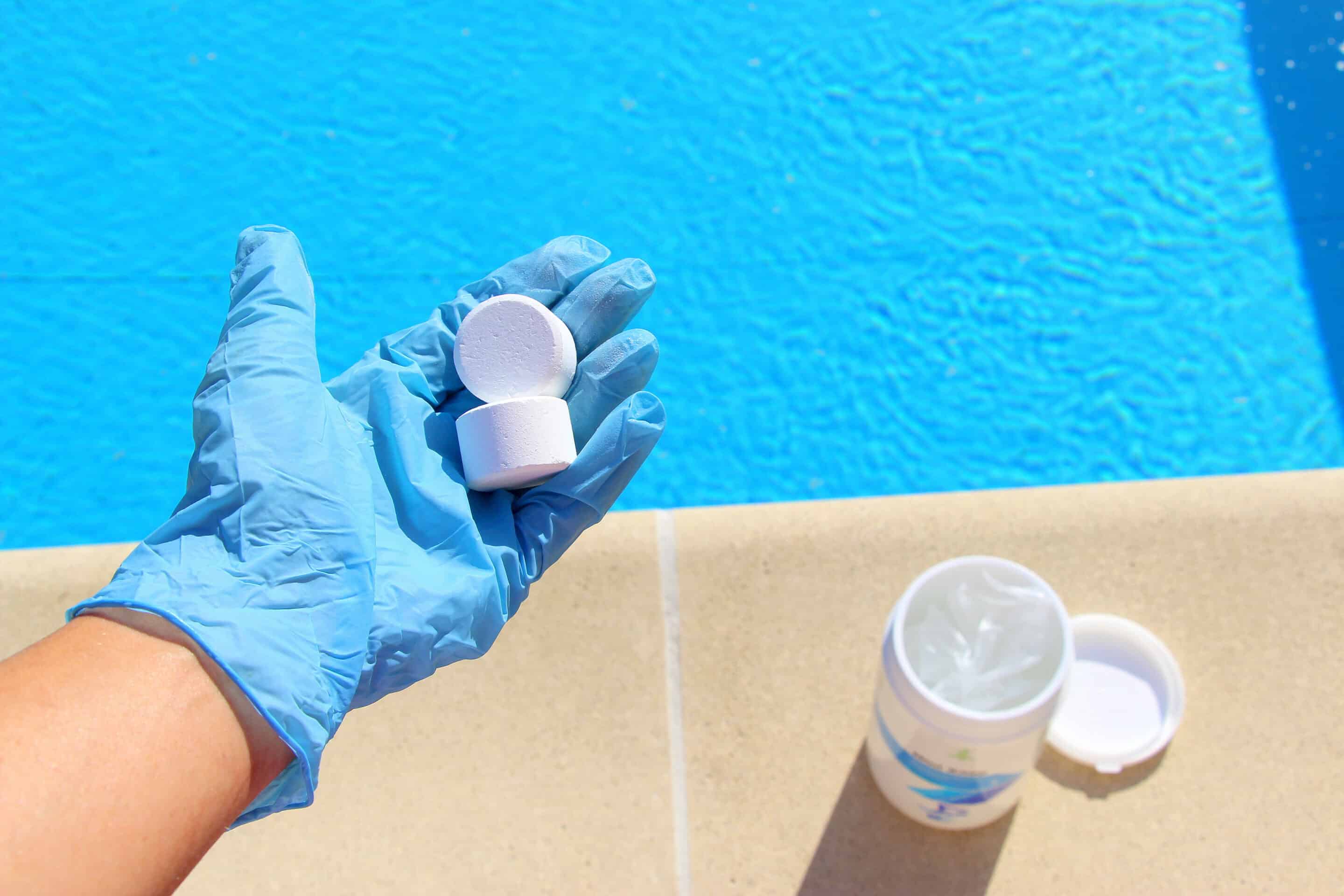
Where you store pool chemicals is important —proper storage is safer and can extend shelf life.
- The best location for pool chemicals is somewhere out of the sun, dry, and cool. Leaving chemicals in humid storage sheds throughout the summer will likely degrade them.
- Following the manufacturer’s directions is crucial, as this will guide you toward best practices for each unique product.
- It is also important to keep chemicals tightly sealed and separated properly. Some pool chemicals can react dangerously if mixed accidentally.
- Don’t stack chemical containers on top of each other, and keep them away from things like household cleaners, gasoline, or fertilizers.
How to Recognize and Dispose of Expired Pool Chemicals
The clearest sign that your chemicals have expired is that they stop working effectively. If you’ve attempted to use them and didn’t get the desired result, it might be time to purchase new ones. Never pour old chemicals down your drain or outside when disposing of them. Instead, take them to a waste management facility.
You can often tell a chemical has gone bad just by looking at it or how it’s changed physically. Watch for:
- Containers that are bulging or leaking
- Powders that have hardened into solid masses
- Strong or unusual odours
- Visible moisture inside the packaging
- Tablets that crumble excessively
- Discolouration in liquid chemicals
If a chemical looks off or contaminated, don’t keep handling it or try to “see what happens” by putting it in the pool. A common mistake is trying to fix weak chlorine by simply adding more of it, which can throw off the water balance and lead to irritation for swimmers.
When it comes to disposal, keep products separate – never mix different chemicals together. Mixing chlorine with other chemicals can create dangerous reactions or toxic fumes.
Most municipalities offer hazardous household waste programs that accept expired pool chemicals safely. If you are unsure how to dispose of a product properly, contact your local waste management authority or pool professional before handling it further.
Trust the Professionals with Your Pool Cleaning Needs
Professional pool cleaning and maintenance can ensure your oasis stays clean and safe throughout the summer. If you have questions about chemicals or need assistance keeping your pool in top shape, Benson Pools can help. Contact us today to learn more.