Winter in Canada brings picturesque snow-capped landscapes and exciting seasonal festivities, but it also marks a significant time for pool owners. As much as we’d all love to imagine our pools as a year-round tropical oasis, the truth is that Canadian winters can be pretty harsh on our backyard pools. This is where winterizing comes into play. In this guide, we’ll take you through the essential steps of this process to ensure your oasis survives the frosty months and stays in good shape until it’s time to open it.
What is Pool Winterizing?
Pool winterizing is the essential process of preparing your pool for the harsh conditions of Canadian winters. As temperatures drop, the freezing weather can pose significant risks to your pool’s equipment, plumbing, and overall structure. Winterizing involves a series of steps designed to safeguard your oasis from potential damage caused by freezing, ice, and snow.
At a high level, the process typically includes cleaning the pool thoroughly, adjusting water chemistry, removing accessories and equipment, draining water, adding winterizing chemicals, and ensuring you have a proper pool covering.
What Happens If You Don’t Winterize Your Pool?
Skipping winterizing, or rushing through it, often catches up with pool owners by spring. Any water left sitting in pipes, filters, or pumps can freeze and expand, cracking equipment that’s expensive to replace. Without balanced chemistry and a proper cover in place, algae can take hold under the ice, leaving you with a green, unsafe pool to deal with come opening day. A little effort now is almost always cheaper than the repairs and cleanup that come from skipping this step.
When to Winterize Your Pool
The onset of winter can be unpredictable, especially in Canada. The ideal time to start winterizing your pool is before the temperature consistently drops below 15°C during the day and before temperatures fall below freezing at night. This timeline typically falls between September and early November, depending on the region.
If you’re in the Ottawa area specifically, that window tends to run a little earlier than in cities further south. Ottawa pools are typically best closed between late September and mid-October, ahead of Toronto and much of southern Ontario, where the 15°C threshold usually isn’t hit until closer to late October.
Preparing for Winterization
Before diving into the winterizing process, gather the necessary tools and equipment. This includes:
- A winter-friendly pool cover
- Winterizing chemicals
- Skimmer plugs
Next, clean the pool, remove debris, and inspect for damage or leaks. If you notice any problem areas, address them before winter sets in.
How to Winterize a Pool: Step-by-Step Guide
Now that you’ve cleaned your pool and addressed any structural issues, it’s time to winterize.
1. Drain the Water to an Appropriate Level
Begin by draining the water in your pool to a level recommended by your pool manufacturer or local guidelines. The right level also depends on your pool type. For in-ground pools, aim to lower the water below the skimmer opening. Above-ground pools call for less draining, usually 4 to 6 inches below the skimmer.
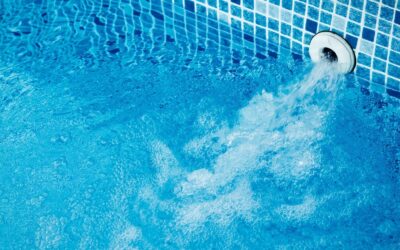
Typically, the right water level lands just below the skimmer and return jets. Draining to this level prevents potential damage due to freezing, allowing space for ice expansion while safeguarding the pool’s structure.
2. Remove Pool Accessories and Equipment
Carefully remove and store all pool accessories, such as diving boards, ladders, and skimmer baskets. Clean and dry these items thoroughly to prevent damage in storage. Additionally, remove and properly store pool pumps, heaters, and filters after cleaning them to ensure they’re in good condition when you reopen in the spring.
3. Balance Water Chemistry
Test and balance the water chemistry of your pool to ensure it’s in optimal condition for the dormant winter months. Adjust pH, alkalinity, and calcium hardness levels as needed; balanced water helps prevent scale buildup and corrosion.
4. Add Winterizing Chemicals
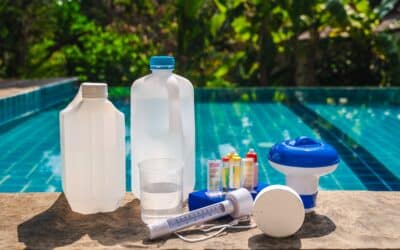
Use winterizing chemicals according to manufacturer recommendations to prevent algae and bacteria growth during the cold months. These chemicals can include algaecides and winterizing kits to maintain water clarity and quality throughout the season.
A typical winterizing kit isn’t just one product; it’s a combination working together:
- Algaecide keeps algae from taking hold under the cover.
- A winter-strength shock treatment clears out any remaining contaminants before the pool sits dormant.
- An enzyme treatment breaks down oils, lotions, and other organic residue that would otherwise feed algae growth over the winter.
- Pool-safe antifreeze, used only in plumbing lines rather than the pool itself, protects against freezing and cracking pipes.
5. Protect Pool Plumbing and Equipment from Freezing
Drain water from filters, pumps, and heaters. Use pool antifreeze in plumbing lines to prevent any remaining water from freezing and causing damage. Additionally, it’s a good idea to properly insulate exposed pipes and equipment to protect them from the harsh winter conditions. This is also the time to use your skimmer plugs to create an airtight seal through the cold months.
6. Cover the Pool
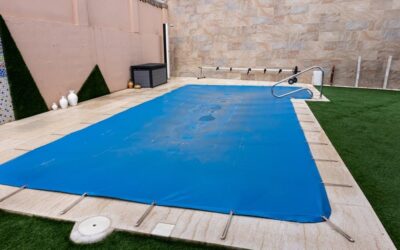
Choose a high-quality, durable cover specifically designed for winter protection. Ensure it fits snugly over the pool, leaving no gaps for debris or animals to enter. Install the cover tightly and use water bags, cover clips, or anchors to keep it in place.
Most homeowners underestimate how much the cover itself matters. Go with a dense mesh, the kind sometimes sold as Mesh99 fabric, and you’re blocking around 99% of sunlight from reaching the water. That matters because algae still feeds on sunlight even when the water’s freezing, so cutting most of it out now means a much easier pool to look at come spring.
Your Top 10 Winterizing Checklist
If you’d rather work from a quick list than a full walkthrough, here’s the process boiled down:
- Clean the pool and check for damage
- Balance the water chemistry
- Drain to the correct level for your pool type
- Remove and store ladders, baskets, and accessories
- Clean and store pumps, heaters, and filters
- Add algaecide and shock treatment
- Add an enzyme treatment
- Use pool-safe antifreeze in plumbing lines
- Insert skimmer plugs
- Install a snug, high-quality winter cover
Frequently Asked Questions
Do I need to fully drain my pool?
No. Fully draining a pool can cause more harm than good by putting pressure on the structure that the water’s weight would normally balance out. Lowering the water to just below the skimmer, or 4 to 6 inches below it for above-ground pools, is enough.
Can I winterize my pool myself?
Yes, plenty of homeowners handle winterizing on their own with the right tools and a bit of time. That said, if you’re short on time, unsure about your equipment, or want the peace of mind of a professional job, a pool closing service can handle the entire process for you.
How long does winterizing take?
Most residential pools take a few hours to winterize start to finish, though that timeline stretches if you run into repairs or equipment issues along the way.
Need Professional Winterizing Assistance?
At Benson Pools, we’re the go-to experts for pool closing. We use industry-leading techniques and can take care of all the steps—you don’t have to lift a finger. Contact us today to learn more!